Virginia Woolf
Free The Voyage Out by Virginia Woolf — PDF EPUB Download
Free The Voyage Out PDF: Virginia Woolf's First Novel
If you are looking for a free The Voyage Out pdf, you have found the book where one of the great literary careers began. Published in 1915, The Voyage Out is Virginia Woolf's first novel, and it already contains almost everything that would make her famous: the attention to the inner life, the questioning of how women are expected to live, the comedy of English people abroad, and the sense that a single consciousness can hold a whole world. The novel is in the public domain in the United States, which means you can download it legally and free in PDF and EPUB on Noveliopdf, with no account, no payment, and no trial to cancel. Whether you are reading Woolf for the first time, working through her novels in order, or looking for the first appearance of Clarissa Dalloway, this free The Voyage Out pdf is the place to begin.
The novel opens in London, where a party of English people board the Euphrosyne, a ship bound for South America. The ship belongs to Willoughby Vinrace, a shipping merchant, and among the passengers is his daughter Rachel, a young woman of twenty-four who has lived a sheltered life with her father and knows almost nothing of the world. With her travel her aunt Helen Ambrose and her uncle Ridley, and — by a piece of social manoeuvring — Richard and Clarissa Dalloway, a confident, political couple who take Rachel under their wing and introduce her, in their brisk, assured way, to ideas about life, love, and marriage that she has never encountered before. The voyage is the first part of Rachel's education: she plays the piano with passionate concentration, she listens to conversations she does not understand, and she begins, slowly, to form a mind of her own.
What The Voyage Out Is About
When the Euphrosyne reaches South America, the party settles in Santa Marina, a fictional resort town where English tourists live in a hotel and pretend, as tourists do, that they are not tourists. Here Rachel's education continues among a large, vivid cast: the aspiring novelist Terence Hewet, who talks about writing and life with an earnestness that both attracts and irritates her; the elderly William Pepper, who disapproves of almost everything; the young men and women of the hotel, flirting, quarrelling, and forming the temporary friendships of a holiday. Rachel and Terence fall in love, and their courtship — conducted in long conversations about books, music, and what marriage might mean — is one of the most honest love stories in Woolf's work. Neither of them is sure what they want, and Woolf lets them be unsure, which is what makes them feel real.
But this is not a novel that ends in a wedding. Rachel, who has spent the whole book discovering the world, falls ill with a fever, and her illness becomes the novel's terrible climax. Woolf describes Rachel's dying with an intensity that still shocks readers: the confusion, the dreams, the slow slipping away of the world she has only just begun to know. Terence is left to grieve, and the other characters are left to go on with their holidays, their conversations, and their lives. The ending is the novel's most argued-over feature, and it is also its most Woolfian: the suggestion that a life can be real and complete even when it is cut short, and that the world goes on being beautiful and indifferent at the same time.
Rachel Vinrace and the World She Discovers
Rachel is one of Woolf's most affecting heroines because she is so unformed. She has been kept from the world by a well-meaning father, educated at home, and given music instead of ideas, and when she is finally released into company, everything is new to her: politics, flirtation, the talk of clever men, the sight of the sea at night. Woolf follows her consciousness with a patience that would become her signature — long passages in which Rachel listens, wonders, misunderstands, and slowly begins to think for herself. The piano is her truest language: when she plays, she is confident and free in a way she never is in conversation, and the novel returns again and again to the image of Rachel at the keyboard, saying with music what she cannot yet say in words.
The novel is also a sharp comedy of English life abroad. The hotel at Santa Marina is full of people who have brought England with them and are determined not to notice where they are: they complain about the food, they gossip about each other, they organise excursions, and they discuss the natives with a confidence that Woolf quietly punctures. The colonial setting is not incidental. Woolf is writing about an empire that takes its own customs everywhere and calls them civilisation, and about a young woman who is beginning to see that the customs she has inherited — about marriage, about women's lives, about what a woman is for — are not laws of nature but arrangements that can be questioned. It is a theme she would return to for the rest of her career.
Clarissa Dalloway's First Appearance
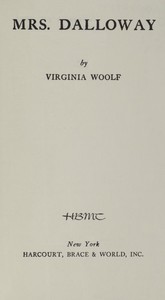
For many readers, the most exciting thing about The Voyage Out is that it contains the first appearance of Clarissa Dalloway, the heroine of Woolf's later masterpiece Mrs Dalloway. The Clarissa of 1915 is younger, brisker, and more conventional than the Clarissa of 1925, but she is recognisably the same woman: charming, socially gifted, full of opinions, and certain that life is a matter of knowing the right people and saying the right things. She takes Rachel in hand on the ship, tells her what to think about love and marriage, and then sails away, leaving Rachel to discover for herself how little of that advice applies to her. It is a small role, but it is a fascinating one for anyone who loves Mrs Dalloway: you can watch Woolf inventing a character she would spend the next decade thinking about, and you can see how much deeper her understanding of Clarissa would become.
The novel also matters because it shows Woolf learning her craft. She worked on the book for years — an early draft was called Melymbrosia — and revised it extensively before it was published by Duckworth in 1915. The conventional chapters, the large social cast, and the romantic plot belong to the Edwardian novel she inherited, but the attention to consciousness, the fluid movement between minds, and the willingness to let a novel end in loss rather than marriage belong to the modernist she was becoming. Read after Mrs Dalloway or Night and Day, it shows the roots of her genius; read first, it is the most accessible way into her work, a real story with real people that happens to be written by one of the greatest novelists who ever lived.
How to Download The Voyage Out Free
Downloading your free The Voyage Out pdf is simple. Go to the book page for The Voyage Out, choose the PDF or EPUB button, and the file downloads straight to your device while the website stays open, so you can keep browsing for your next read. The PDF is ideal for reading on a computer or tablet and for printing, while the EPUB works beautifully on phones, e-readers, and reading apps, with adjustable text size and bookmarks. Both files are the complete, unabridged novel, in the public domain in the United States, so the download is completely legal and completely free. There is no account to create and nothing to pay. Whether you are beginning your journey through Virginia Woolf or returning to where it all started, her first novel is waiting for you, free, on Noveliopdf.