Niccolò Machiavelli
Free Discourses on Livy by Niccolò Machiavelli — PDF EPUB Download
Free Discourses on Livy PDF: Machiavelli on Republics and Freedom
If you are looking for a free Discourses on Livy pdf, you have found the deepest and most surprising book Niccolò Machiavelli ever wrote. Written between 1513 and 1519 and published in 1531, four years after his death, Discourses on Livy is Machiavelli's great study of republican government, written as a commentary on the first ten books of the Roman historian Livy's history of Rome. In it, Machiavelli asks the questions that still shape political thought today: how do republics rise and fall, how do citizens stay free, and why did Rome become great? His answers are bold, original, and often startling, and they shaped the thinking of the English, American, and French revolutionaries who built the modern world. The book is in the public domain in the United States, which means you can download it legally and free in PDF and EPUB on Noveliopdf, with no account, no payment, and no trial to cancel. Whether you are studying politics, history, or philosophy, or you simply want to understand the thinker behind The Prince, this free Discourses on Livy pdf is essential reading.
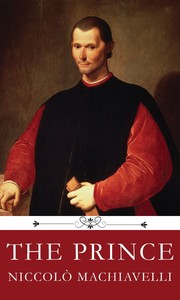
Machiavelli wrote the Discourses after his political career had been destroyed. He had served the republic of Florence as a diplomat and secretary, travelling to France, Germany, and the courts of Italy, and watching power at first hand. In 1512, when the Medici returned to Florence and the republic fell, he was arrested, tortured, and exiled to his farm at San Casciano. It was there, in forced retirement, that he wrote his two great works: The Prince, in 1513, and the Discourses, over the years that followed. The Prince is the book everyone knows, the handbook for rulers that gave us the word Machiavellian. But the Discourses is the book Machiavelli himself considered more important, and it is a very different kind of work. Where The Prince asks how a single ruler can gain and keep power, the Discourses asks how a whole people can govern themselves and stay free. Machiavelli takes Livy's history of early Rome as his text, and chapter by chapter he draws lessons from it: that Rome became great because it allowed conflict between the common people and the nobles, because it kept its citizens armed and virtuous, and because it built institutions that could change with the times. He argues that a republic needs laws, but it also needs good citizens, and that the two depend on each other. A people that loses its civic spirit will lose its freedom, no matter how good its laws may be.
What Discourses on Livy Is About
The Discourses is divided into three books, and each one tackles a different part of the problem of republican government. The first book looks at how republics are founded and how they survive, arguing that Rome's greatness came from the tumults between the plebeians and the patricians, the ordinary people and the nobles. Where other writers saw such conflict as a sign of disorder, Machiavelli saw it as the source of liberty: the people's desire not to be oppressed, and the nobles' desire to rule, kept each other in check and produced good laws. The second book looks at how republics grow and defend themselves, arguing that Rome expanded because it welcomed new citizens, made allies of conquered peoples, and kept a citizen army rather than relying on mercenaries. The third book looks at how republics decline and how they can be renewed, arguing that states must return to their founding principles, and that great men are needed at moments of crisis, but that no republic can depend on great men alone. Throughout the book, Machiavelli uses examples from Roman history, from the Bible, and from the Italian cities of his own day, and he writes with the same directness that makes The Prince so gripping. He is not interested in how governments ought to work in theory; he is interested in how they actually work, and what history shows about why they succeed and fail.
Why Discourses on Livy Still Matters
Discourses on Livy still matters because it is one of the founding texts of modern republican thought. The American founders read it carefully: John Adams, Thomas Jefferson, and James Madison all knew Machiavelli's argument that a republic depends on the virtue of its citizens and on institutions that balance competing interests. The English republicans of the seventeenth century read it too, and so did the French revolutionaries. In our own time, when democracies around the world are asking how they can survive, Machiavelli's questions feel urgently modern. How do you keep citizens engaged in public life? How do you prevent wealth and power from corrupting a republic? How do you renew institutions that have grown tired and corrupt? Machiavelli's answers are not comfortable. He believed that freedom requires struggle, that citizens must be willing to defend their republic themselves, and that no constitution can save a people that has lost its public spirit. But his book is also hopeful: it insists that ordinary people, given good institutions and a share in power, are capable of governing themselves, and that republics, properly founded, can last for centuries. Readers who enjoy The Republic of Plato or the Leviathan of Hobbes will find in the Discourses a different kind of political philosophy, one written not from abstract principles but from history, experience, and a deep love of liberty.
About Niccolò Machiavelli
Niccolò Machiavelli (1469-1527) was born in Florence, the son of a lawyer, and he entered public life at the age of twenty-nine, when he was appointed secretary to the Florentine republic. For fourteen years he served as a diplomat, travelling on missions to the King of France, the Emperor, and the Pope, and to the court of Cesare Borgia, whose ruthless energy fascinated him. He also tried to build a citizen militia for Florence, believing that a republic should defend itself with its own citizens rather than with hired soldiers. When the Medici returned in 1512, he lost everything: his office, his freedom, and for a time his health, after torture in prison. He spent the rest of his life writing, in the hope of being called back to public service. Besides The Prince and the Discourses, he wrote histories, plays, and poems, including a history of Florence and a famous comedy, Mandragola. He died in 1527, poor and largely unrecognised, and his books were condemned by the Church. But his ideas could not be suppressed. Within a century, he was one of the most read and most argued-about writers in Europe, and he remains so today, the founder of modern political science and the most honest observer of power who ever wrote.
How to Download Discourses on Livy Free in PDF and EPUB on Noveliopdf
Downloading your free Discourses on Livy pdf or EPUB could not be simpler. Open the book page for Discourses on Livy on Noveliopdf and choose the format you want. The PDF is ideal for reading on a computer or tablet, or for printing, while the EPUB works beautifully on e-readers and reading apps on your phone. Both files are free, legal, and complete, with no sign-up and no cost, because the book is in the public domain. If you have read The Prince and want to know what Machiavelli really thought about freedom, this is the book to read next. And if you are new to Machiavelli altogether, the Discourses is the best place to begin: it is longer and richer than The Prince, and it shows the full range of his mind. Download it free today and discover the republican Machiavelli, the thinker who taught the modern world how citizens stay free.