John Milton
Free Areopagitica by John Milton — PDF EPUB Download
Free Areopagitica PDF: Milton's Defence of Free Speech
If you are looking for a free Areopagitica pdf, you have found one of the most important essays ever written about freedom. Published in 1644, Areopagitica is John Milton's great argument against the licensing of books, addressed to the Parliament of England, and it remains the classic defence of free speech nearly four hundred years later. Milton wrote it at the height of the English Civil War, when Parliament, having overthrown the king's censorship, had set up a censorship of its own. His plea is simple and radical: let books be printed freely, and let truth defend itself. The work is in the public domain, which means you can download it legally and free in PDF and EPUB on Noveliopdf, with no account, no payment, and no trial to cancel. Whether you are studying English literature, political philosophy, or the history of free expression, this free Areopagitica pdf is essential reading.
Milton's full title tells you exactly what the work is: Areopagitica; A Speech of Mr. John Milton for the Liberty of Unlicenc'd Printing, to the Parliament of England. The title refers to the Areopagus, the ancient Athenian court on the hill of Ares, and the speech is written as if Milton were addressing that court, though his real audience was Parliament. The occasion was the Licensing Order of June 1643, under which no book could be printed without first being approved by an official licenser. Milton had personal reasons to object. He had published pamphlets arguing for divorce, and they had appeared without a licence, which made him a lawbreaker in the eyes of the new order. But his argument is not personal. It is a defence of reading itself, of the right of ordinary people to encounter ideas, including dangerous ones, and to judge them for themselves.
What Areopagitica Argues
Milton's argument runs through several great ideas, and each one has echoed down the centuries. First, he says that licensing is borrowed from the worst source imaginable: it was invented by the Inquisition, the Catholic Church's machinery for suppressing heresy, and it is unworthy of a Protestant nation that claims to love the truth. Second, he argues that licensing cannot work. A licenser cannot possibly read everything, and even if he could, he would have to be wiser than the authors he judges, which no official can claim to be. Third, and most powerfully, he argues that licensing insults the reader. To require every book to be approved in advance is to treat the whole nation as children who cannot be trusted with ideas, and to do so is an injury to learning itself. A nation that will not let its people read freely, Milton says, cannot hope to be a learned nation.
The heart of the essay is Milton's faith in truth. He does not deny that bad books exist, or that they can do harm. He argues instead that truth is strong enough to survive a fair fight. In his most famous passage he writes, "Let Truth and Falsehood grapple; who ever knew Truth put to the worse, in a free and open encounter?" It is a sentence that has been quoted by defenders of free speech ever since, and it captures Milton's deepest conviction: that truth does not need the protection of the censor, because in open debate it will win on its own merits. He compares a good book to a living thing, writing that a good book is the precious life-blood of a master spirit, embalmed and treasured up on purpose to a life beyond life. To destroy a book, he says, is worse than to kill a man, because it kills reason itself. These are not the words of a cool debater. They are the words of a man who believed that books are sacred, and that to license them is to commit a kind of murder.
Why Areopagitica Still Matters
Areopagitica still matters because the argument it makes has never been settled. Every generation has its own version of the licensing order, whether it takes the form of government censorship, corporate control of publishing, or the quiet suppression of unwelcome opinions. Milton's essay is the first great statement of the principle that freedom of expression is not a luxury but a necessity, and that a society which controls what its people may read has already decided what they may think. The essay failed in its immediate aim: Parliament ignored it, and licensing continued in England until 1695. But as an argument it has never been bettered, and it has shaped every later defence of a free press, from the First Amendment to the modern human rights declarations that guarantee freedom of expression. Students of law, politics, and journalism still read it as a founding document of their fields.
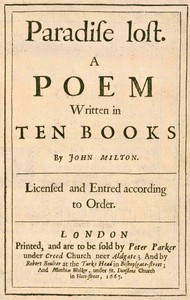
It also matters as literature. Milton wrote Areopagitica when he was thirty-five, more than twenty years before Paradise Lost, and the prose already shows the power that would make the epic possible. The sentences are long, rolling, and musical, full of biblical echoes and classical learning, and they carry an anger that is never petty and a hope that is never naive. It is not an easy text for a modern reader at first, because Milton writes in the English of the seventeenth century and expects his reader to know the Bible and the classics. But it repays the effort, and it is short enough to be read in a single sitting. For anyone who has ever wondered why free speech matters, or who has ever been told that some book is too dangerous to read, Areopagitica is the answer that has stood for nearly four centuries.
About John Milton
John Milton was born in London in 1608, the son of a composer, and educated at Cambridge, where he earned a reputation for learning and for stubborn independence. He spent his twenties studying and writing poetry, and in the 1640s he threw himself into the political and religious arguments of the Civil War, writing pamphlets on divorce, on the freedom of the press, and on the execution of the king. He served as a secretary to Cromwell's government and went blind in the early 1650s, yet he continued to write, dictating his work to helpers. After the Restoration of the monarchy in 1660 he was briefly in danger of his life, but he survived, and in his blindness he composed the work that made him immortal, Paradise Lost, published in 1667, followed by Paradise Regained and Samson Agonistes. He died in 1674. Areopagitica stands at the midpoint of his life, between the young poet and the blind epic writer, and it shows both at once: the poet's ear and the prophet's fire.
Download Areopagitica Free in PDF and EPUB
Areopagitica is in the public domain, so you can download it free and legally on Noveliopdf in both PDF and EPUB. The PDF is ideal for reading on a computer or tablet and for printing, while the EPUB is made for e-readers and phone apps, reflowing the text to fit any screen. There is no account to create and nothing to pay, and the download starts at once while the website stays open. If you enjoy Areopagitica, you will find more of Milton's great work on Noveliopdf, including Paradise Lost, all free in the same two formats. Download your free Areopagitica pdf or EPUB today and read the speech that has defended the freedom to read for nearly four hundred years.