Daniel Defoe
Free A Journal of the Plague Year by Daniel Defoe — PDF EPUB Download
Read it free on Noveliopdf — no sign-up needed.
Free A Journal of the Plague Year PDF: Defoe's London in Crisis
If you are looking for a free A Journal of the Plague Year pdf, you have found one of the most gripping books ever written about a city in crisis. Published in 1722, A Journal of the Plague Year is Daniel Defoe's vivid, eyewitness-style account of London during the Great Plague of 1665, when the disease emptied the streets, filled the burial pits, and tested every bond of family, neighbourhood, and faith. The narrator, a saddler who signs himself H.F., stays in the city while others flee, and records what he sees with the plain, unflinching eye of a man who has lived through it. The book is in the public domain, which means you can download it legally and free in PDF and EPUB on Noveliopdf, with no account, no payment, and no trial to cancel. Whether you are studying Defoe, the history of epidemics, or simply looking for a book that reads like a novel and a true history at once, this free A Journal of the Plague Year pdf is a fine place to start.
Defoe was only five years old when the plague struck London in 1665, so the journal is not a diary written at the time, but a work of imagination built on memory, research, and the stories of those who lived through it. That is part of what makes it so remarkable. Defoe reconstructed the plague year from the bills of mortality, the official orders of the Lord Mayor, and the recollections of survivors, and he wove them into a narrative so convincing that readers have taken it for a genuine diary ever since. It is, in fact, a novel, and one of the first great works of realistic fiction in English. But it is a novel that is also a history, and its power comes from the way the two are inseparable. Every detail, from the shutting up of infected houses to the great burial pits, is drawn from the real record of the plague, and every scene is alive with the fear, the courage, and the confusion of a city under siege.
What A Journal of the Plague Year Is About
The narrator, H.F., is a saddler living in London when the plague arrives. His brother urges him to flee the city, and H.F. nearly does, but at the last moment he decides to stay, trusting in providence and in his own caution. What follows is a day-by-day account of the plague year, from the first scattered deaths in the winter of 1664 to the terrible peak of the summer and autumn of 1665, when the weekly bills of mortality recorded thousands of deaths, and the city seemed to be emptying itself of the living. H.F. walks the streets, talks to his neighbours, visits the markets, and records everything: the houses marked with a red cross and the words Lord have mercy upon us, the watchmen posted at the doors of infected homes, the carts that carried the dead away at night, and the great pits where the bodies were buried in haste.
Alongside the public record, H.F. tells the private stories of the people he meets. There is the woman who refuses to leave her dying children, the man who locks himself in his house and survives by sheer stubbornness, the groups of Londoners who flee the city together and try to live in the countryside, only to be turned away by frightened villagers. There are stories of heroism and of panic, of neighbours who risk their lives to help the sick and of others who abandon their own families to save themselves. Defoe does not moralise about these stories, and he does not turn them into simple lessons. He records them as they are, in all their human complexity, and he lets the reader feel the weight of each choice. The result is a book that is both a chronicle of a disaster and a portrait of human nature under the greatest pressure imaginable.
Quarantine, the Bills of Mortality, and the Machinery of Survival
One of the most fascinating parts of the book is Defoe's account of how London tried to organise itself against the plague. The Lord Mayor and the aldermen issued orders for the shutting up of houses, for the marking of infected dwellings, for the appointment of searchers and watchmen, and for the regular publication of the bills of mortality, the weekly lists of deaths by parish that let the city track the progress of the disease. H.F. records these measures in detail, and he also records how they worked in practice: how families smuggled food to shut-up houses, how the watchmen could be bribed, how the desperate found ways around every rule. It is a portrait of a city trying to govern a catastrophe with the tools it had, and it feels startlingly familiar to any reader who has lived through a modern epidemic.
Defoe also shows the economic life of the plague year, and it is a world of sharp contrasts. While the rich fled to the countryside, the poor stayed, because they had nowhere else to go, and the tradesmen who stayed found their businesses transformed. The saddler's own trade collapsed, but others, from the makers of coffins to the sellers of medicines, grew rich on the disaster. Quack doctors sold useless remedies, astrologers sold predictions, and preachers filled the churches with sermons on divine judgement. H.F. watches it all with a clear eye, noting both the fraud and the genuine charity, the panic and the resilience. His account is a reminder that a plague is not only a medical event, but a social one, and that it reveals a city as it really is, stripping away the pretences of ordinary life and showing what people do when everything is at stake.
Why A Journal of the Plague Year Still Matters Today
Three centuries after it was published, A Journal of the Plague Year still matters, because it is one of the great books about how human beings behave in a crisis, and because its subject has never stopped being relevant. Readers who lived through recent pandemics have found in Defoe's book a mirror of their own experience: the rumours, the contradictory advice, the fear of neighbours, the arguments about whether to stay or to flee, and the small acts of kindness that keep a community alive. Defoe understood that a plague is not only a story of death, but a story of how people live with death, and his book is as much about the living as it is about the dead. That is why it is still read in courses on literature, history, and public health, and why it is still quoted whenever a new epidemic makes the news.
The book is also a landmark in the history of the novel. It showed that fiction could be built from documents, statistics, and observed detail, and that a made-up story could tell the truth about a real event more powerfully than a chronicle. Defoe's plain, unadorned prose, his attention to numbers and to names, and his refusal to flinch from the horrible, all point forward to the realism of the nineteenth-century novel and to the documentary fiction of our own day. For readers new to Defoe, it is an ideal starting point, more accessible than Robinson Crusoe in some ways, because its subject is so immediate and its narrator so companionable. A free A Journal of the Plague Year pdf is the easiest way to discover it: download it, read the first chapters, and see whether H.F.'s London catches you, as it has caught readers for three hundred years.
How to Download A Journal of the Plague Year Free in PDF and EPUB
Downloading A Journal of the Plague Year free in PDF and EPUB on Noveliopdf is simple. Visit the book page for A Journal of the Plague Year and choose the format you prefer. The PDF is ideal for reading on a computer or tablet, or for printing, while the EPUB works beautifully on phones and e-readers, letting you change the font size and read comfortably anywhere. Both files are free, legal, and complete, and the download starts on the site itself, so you stay on Noveliopdf while your book arrives. There is no account to create and nothing to pay, because the book is in the public domain and free for everyone.
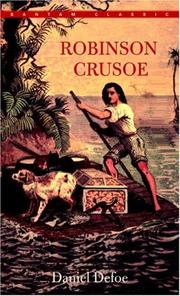
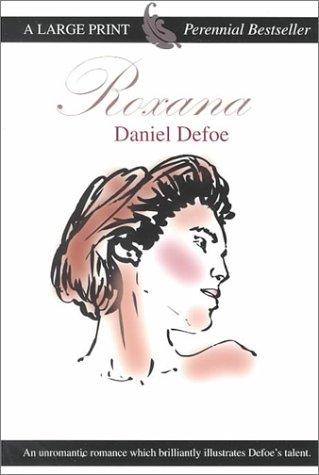
If you enjoy Defoe, Noveliopdf has more of his great novels waiting for you. Read Robinson Crusoe, the adventure that made Defoe famous around the world, or Moll Flanders, the story of a remarkable woman surviving by her wits in the London underworld. For his most daring novel of ambition and guilt, read Roxana, and for another great diary of London in the seventeenth century, try Samuel Pepys's The Diary of Samuel Pepys. For a later plague novel that owes everything to Defoe, read Jack London's The Scarlet Plague. Each one is free in PDF and EPUB, and each one shows a different face of the storytelling that Defoe helped to create.